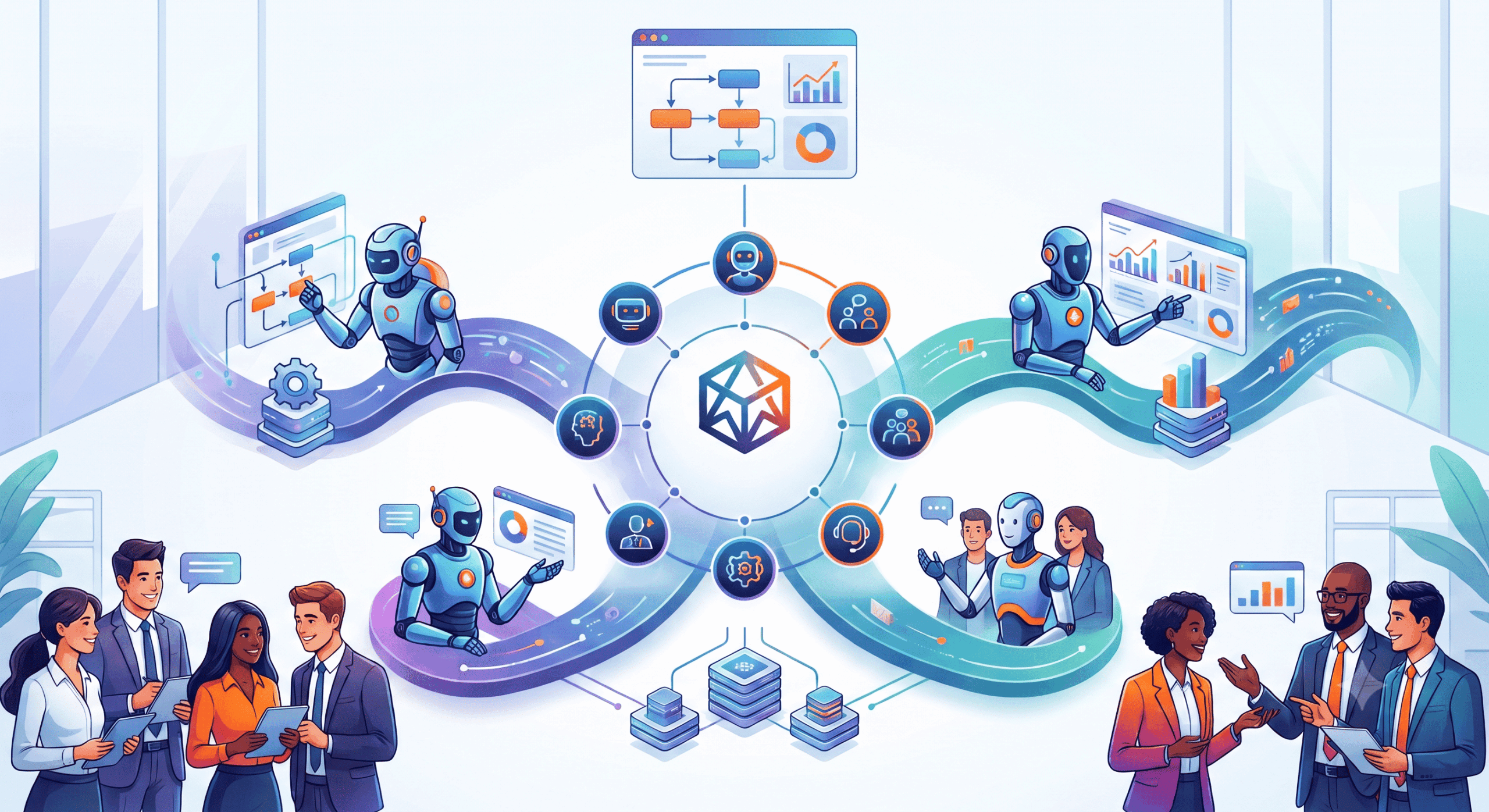
Traditional automation follows predefined rules; it stops the moment conditions change. AI agents, however, understand the ultimate goal, analyze the data, make real-time decisions, and execute tasks end-to-end.
The Gemini Enterprise Agent Platform (GEAP) is the ultimate platform to bring this transformation to life at an enterprise scale—securely and manageably. In this article, we explore the architecture and business value of transitioning to the era of agentic enterprise automation.
The End of Automation, the Beginning of the Agentic Enterprise
While Robotic Process Automation (RPA) and traditional workflows succeed in highly structured, unchanging processes, real-world business is full of exceptions—missing invoices, unexpected customer requests, and malformed data formats.
In an agentic enterprise model, software is no longer just a tool that “runs steps.” Instead, it acts as a digital coworker that understands context, queries different systems when necessary, and presents finalized outcomes for human approval. GEAP delivers this intelligent layer backed by enterprise-grade security standards.
The GEAP Architecture: Model Selection, Low-Code Development, and Orchestration
GEAP is built upon three core architectural layers:
- Model Selection: Automatically select the best-fit Gemini model for each task based on speed, cost, or deep reasoning requirements.
- Low-Code Development: Business units can easily design and deploy their own AI agents without being entirely dependent on software development teams.
- Orchestration: Seamlessly manage multi-agent workflows. For example, one agent collects the data, another analyzes it, and a third compiles the report and sends it to the stakeholder.
The entire workflow remains fully auditable and compliant through centralized authorization and audit logs.
AgentAI Data Cloud: Smart Decisions Fueled by Data Catalogs
An AI agent is only as smart as the data it can access. The AgentIO Data Cloud integration maps all of your organization’s data assets into a single, unified data catalog. It clearly defines:
- Where specific data is stored
- Who has authorization to access it
- How recently the data was updated
When agents make decisions, they query this secure catalog. This ensures that their outputs are never based on guesswork, but on governed, up-to-date corporate data, significantly reducing compliance and security risks.
MCP Universal Connector: Seamless SAP, BigQuery, and Cloud SQL Integration
An AI agent trapped in an information silo is of little use to an enterprise. The Model Context Protocol (MCP) universal connector allows agents to communicate with systems like SAP, Google BigQuery, Cloud SQL, and other legacy platforms via a standardized protocol.
Instead of developing costly custom integrations for every single software in your tech stack, you establish a single, universal connectivity layer. Adding a new system to your workflow is no longer an entire IT project—it’s just a new connector definition.
Real-World Scenario: On-Demand Digital Assistants for Departments
Consider a procurement department: when a request comes in, an AI agent automatically pulls supplier history from SAP, compares it with spending trends in BigQuery, verifies budget alignment, and initiates the approval workflow.
For the employee, this is like having an always-on digital assistant by their side. They simply ask a question, and the agent navigates multiple corporate systems to deliver answers and trigger actions in minutes.
Tangible Business Value: Speed, Cost, and Error Reduction
The ROI of an agentic transformation is measured across three primary pillars:
- Speed: Approval and reporting cycles that used to take days are compressed into minutes.
- Cost: By delegating repetitive, time-consuming tasks to AI agents, your teams can focus on high-value, strategic work.
- Error Reduction: Direct, system-to-system data flow virtually eliminates manual data entry errors and “copy-paste” mistakes.
Your Implementation Roadmap
- [ ] Identify a pilot process: Choose a high-volume, rule-based process that frequently generates manual exceptions.
- [ ] Select integration points: Pinpoint the first 2 or 3 enterprise systems to connect via MCP.
- [ ] Map your data: Define your data catalog and access permissions on AgentIO Data Cloud.
- [ ] Build your first agent: Design your first agent in the low-code environment and launch it in “human-in-the-loop” (approval-required) mode.
- [ ] Measure and scale: Track speed, cost savings, and error-rate metrics after 90 days to scale across other departments.
Take your first step toward building an agentic enterprise. Contact Global IT International today to start planning your GEAP implementation.